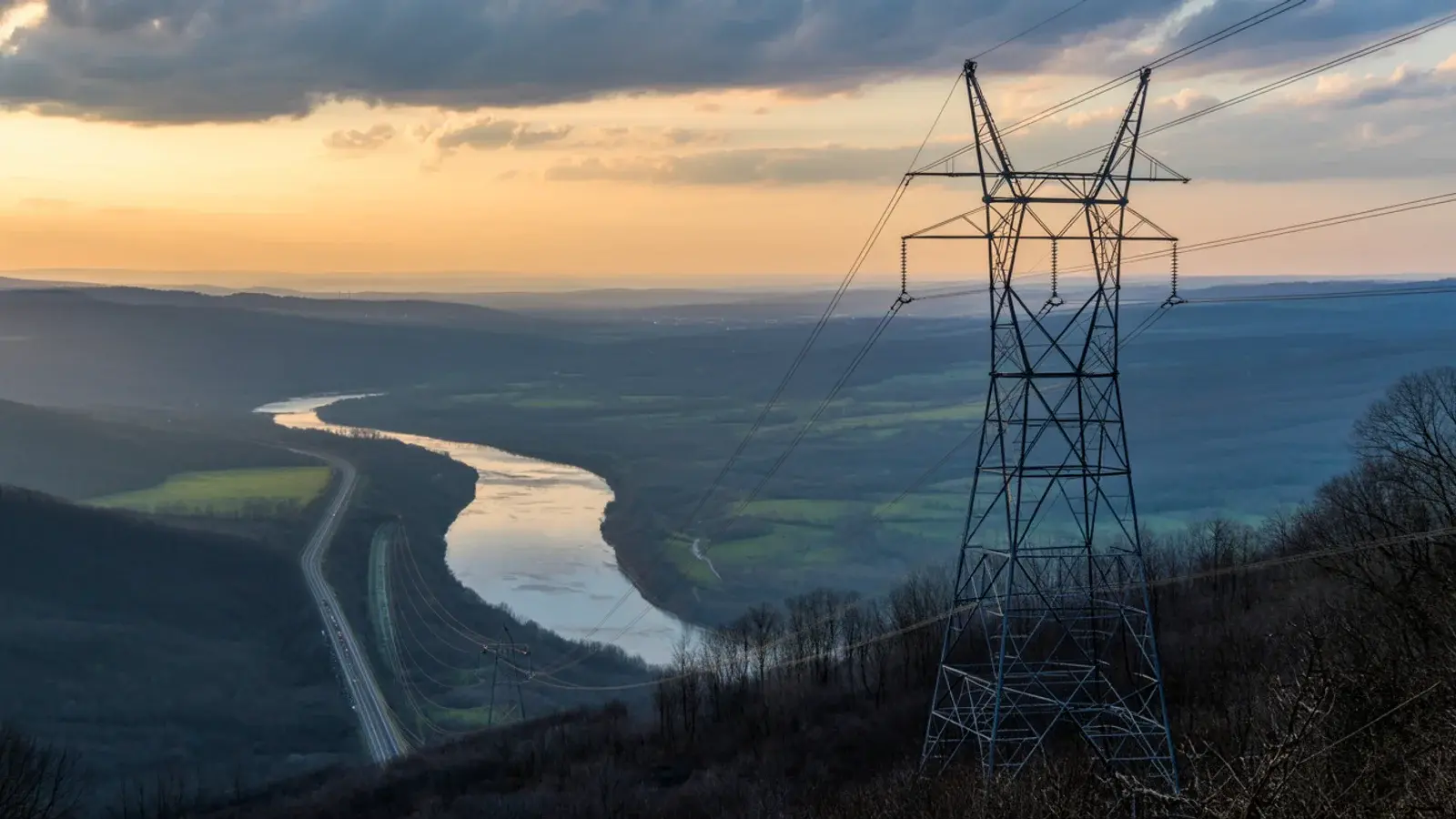
Pennsylvania
Pennsylvania electricity rates and suppliers
Compare licensed suppliers, see current rates by utility, and switch in minutes. Pennsylvania has been a deregulated electricity market since 1996.
Reviewed by Volt Butler editorial team • Updated June 2026 • Source: EIA + PA PUC
See what you could pay in Pennsylvania
Pennsylvania at a glance
20.92¢
Average residential rate per kWh
+6.2%
vs. last year
23
Distribution utilities
102+
PUC-licensed residential suppliers
Rate data from U.S. Energy Information Administration (EIA)
Pennsylvania's electricity utilities
Pennsylvania has 23 distribution utilities. Six serve about 95% of the state's residential customers. The rest are smaller municipal systems and rural electric cooperatives.

FirstEnergy Pennsylvania
Combined service area across central, northern, and western Pennsylvania, encompassing the Met-Ed, Penelec, Penn Power, and West Penn Power territories
1,464,054 residential customers

PECO Energy
Philadelphia and the five-county Philadelphia metro area: Bucks, Chester, Delaware, Montgomery, and Philadelphia counties
1,205,013 residential customers

PPL Electric
Central and eastern Pennsylvania including the Lehigh Valley, Wilkes-Barre, Scranton, Harrisburg, and Lancaster regions, across 29 counties
797,773 residential customers

Duquesne Light
The greater Pittsburgh area, including all of Allegheny County and parts of Beaver County
434,171 residential customers

UGI Utilities
Northeastern Pennsylvania, including the Wyoming Valley, Wilkes-Barre, and surrounding Luzerne County
54,485 residential customers
Adams Electric Cooperative
Rural communities in Adams, Cumberland, Franklin, and York counties in south-central Pennsylvania
32,231 residential customers
Central Electric Cooperative
Rural communities across western Pennsylvania served by member-owned cooperative
23,629 residential customers
REA Energy Cooperative
Rural communities in Cambria and Indiana counties in west-central Pennsylvania
20,932 residential customers
Tri-County Rural Electric
Rural communities in Forest, Warren, and McKean counties in northwestern Pennsylvania
18,206 residential customers
Northwestern Rural Electric
Rural communities in Crawford, Erie, and Mercer counties in northwestern Pennsylvania
18,190 residential customers
Pennsylvania cities we cover
Compare electricity rates for 150 PA cities and towns.
Philadelphia
Pop. 1,582,432
PECO Energy
Pittsburgh
Pop. 303,620
Duquesne Light
Allentown
Pop. 125,320
PPL Electric
Reading
Pop. 94,836
Met-Ed
Erie
Pop. 94,156
Penelec
Bethlehem
Pop. 77,069
PPL Electric
Scranton
Pop. 76,074
PPL Electric
Lancaster
Pop. 57,683
PPL Electric
Levittown
Pop. 50,930
PECO Energy
Harrisburg
Pop. 50,092
PPL Electric
York
Pop. 44,830
Met-Ed
Wilkes-Barre
Pop. 44,217
PPL Electric
Altoona
Pop. 43,508
Penelec
State College
Pop. 40,669
Penelec
Norristown
Pop. 35,782
PECO Energy
Chester
Pop. 33,209
PECO Energy
Bethel Park municipality
Pop. 33,070
Duquesne Light
Drexel Hill
Pop. 30,015
PECO Energy
Hazleton
Pop. 29,886
PPL Electric
Easton
Pop. 29,079
PPL Electric
Monroeville municipality
Pop. 28,383
Duquesne Light
Williamsport
Pop. 27,629
PPL Electric
Plum
Pop. 26,873
Duquesne Light
Lebanon
Pop. 26,600
Met-Ed
King of Prussia
Pop. 25,025
PECO Energy
PA-licensed electricity suppliers
Pennsylvania has 102+ PUC-licensed residential suppliers. Here are the major brands serving PA customers.

AEP Energy
American Electric Power

Agway Energy Services

Atlantic Energy

Champion Energy
Calpine

CleanChoice Energy

Clearview Energy

Constellation Energy
Exelon

Direct Energy
NRG

Discount Power

Energy Harbor
Vistra Corp

Energy Plus
NRG

Engie
ENGIE SA

Frontier Utilities

Green Mountain Energy
NRG

IGS Energy
Interstate Gas Supply

Inspire Clean Energy

Just Energy

North American Power

NRG Home
NRG Energy

PALMCo Power

Public Power

Reliant Energy
NRG

Spark Energy

TriEagle Energy

Verde Energy
You choose who supplies your power — and what you pay
Pennsylvania deregulated electricity in 1996. That means you can shop for a cheaper rate while keeping your utility for delivery and outages.
Same reliable delivery
Your utility (PECO, PPL, Duquesne Light) still maintains the lines and handles outages. Nothing changes there.
Shop the generation rate
The "supply" portion of your bill is where you can save. Compare it to your utility's Price to Compare (PTC).
Green options available
Many suppliers offer 100% renewable plans — often at competitive rates with traditional generation.
Ready to compare rates in your area?
Your electricity bill
How it breaks down
Fixed by your utility — can't change
You can shop this portion
Switching suppliers only affects your generation rate — your delivery stays the same.
Pennsylvania electricity rate trends
Current rate
20.92¢/kWh
5-year change
+49.5%
PA residential rates have risen 50% over the past 5 years according to EIA data.
Pennsylvania electricity rates have generally tracked national trends, with seasonal variation driven by summer cooling demand and winter heating loads for customers with electric heat. Wholesale market dynamics, natural gas prices, and transmission costs all influence retail rates.
Shopping for a competitive supplier can help hedge against rate volatility. Fixed-rate plans lock in a price for 6-24 months, while variable rates fluctuate with market conditions.
41%
of PA households have chosen a competitive supplier
Source: PA Office of Consumer Advocate
102+
PUC-licensed residential electricity suppliers
Source: PA Public Utility Commission
1-2
billing cycles to complete a supplier switch
Service continues uninterrupted
How to switch electricity suppliers in Pennsylvania
Find your Price to Compare
Check your utility bill for your current PTC (Price to Compare). This is the benchmark rate to beat. It's usually listed in the supply charges section.
Compare supplier offers
Use PA Power Switch or compare suppliers here. Look at the rate, contract term, cancellation fees, and renewable content. Don't just chase the lowest rate.
Enroll with your new supplier
Sign up online, by phone, or through a broker. Your utility handles the switch automatically. Expect 1-2 billing cycles before your new rate kicks in.
Pennsylvania-specific notes
- • Your distribution utility never changes — only your supplier
- • No service interruption during the switch
- • You can switch back to default service at any time (subject to contract terms)
- • PA Power Switch is the official state comparison tool
Frequently asked questions
- Is Pennsylvania a deregulated electricity state?
- Yes. Pennsylvania deregulated its electricity market in 1996, making it one of the first states to do so. Residential and business customers can choose their electricity supplier while their local utility continues to handle delivery.
- Who regulates electricity suppliers in Pennsylvania?
- The Pennsylvania Public Utility Commission (PA PUC) licenses and regulates all Electric Generation Suppliers (EGS) operating in the state. Suppliers must meet financial, technical, and consumer protection requirements to maintain their license.
- What is PA Power Switch?
- PA Power Switch (papowerswitch.com) is the official Pennsylvania-sponsored shopping website for comparing electricity and natural gas offers. It's maintained by the PA PUC and provides standardized offer comparisons.
- What is the Price to Compare?
- The Price to Compare (PTC) is the default electricity supply rate charged by your utility if you don't choose a competitive supplier. It's updated quarterly and reflects the utility's wholesale procurement costs. Compare supplier rates against your PTC to evaluate potential savings.
- How is my distribution rate different from my supply rate?
- Your electricity bill has two main components. The distribution rate covers delivery — the poles, wires, meters, and utility service. This stays with your utility and doesn't change when you switch suppliers. The supply rate covers electricity generation — this is the part you can shop for with competitive suppliers.
- Can I switch back to default service if I switch suppliers?
- Yes. You can return to your utility's default service at any time. However, if you're under contract with a supplier, you may owe an early termination fee. Once you switch back, you'll pay the current Price to Compare rate.
- How long does switching electricity suppliers take in Pennsylvania?
- Switching typically takes 1-2 billing cycles (30-60 days) to complete. During this time, your service continues uninterrupted — there's no gap or outage. Your new supplier rate will appear on your bill after the switch is processed by your utility.
Related guides

Pennsylvania Electricity Deregulation Explained
How PA's deregulated market works and what it means for consumers
Understanding Your Price to Compare
What the PTC is and how to use it when shopping for electricity
Fixed vs Variable Rate Plans
Which plan type makes sense for your household

Green Energy Plans in Pennsylvania
What 100% renewable plans really mean and how to evaluate them

How to Switch Suppliers in PA
Step-by-step walkthrough of the switching process

PA Power Switch Guide
How to use Pennsylvania's official comparison tool
Ready to compare Pennsylvania electricity rates?
Enter your ZIP code to see available suppliers and rates in your area.
Free comparison • 102+ PUC-licensed suppliers • EIA-cited data