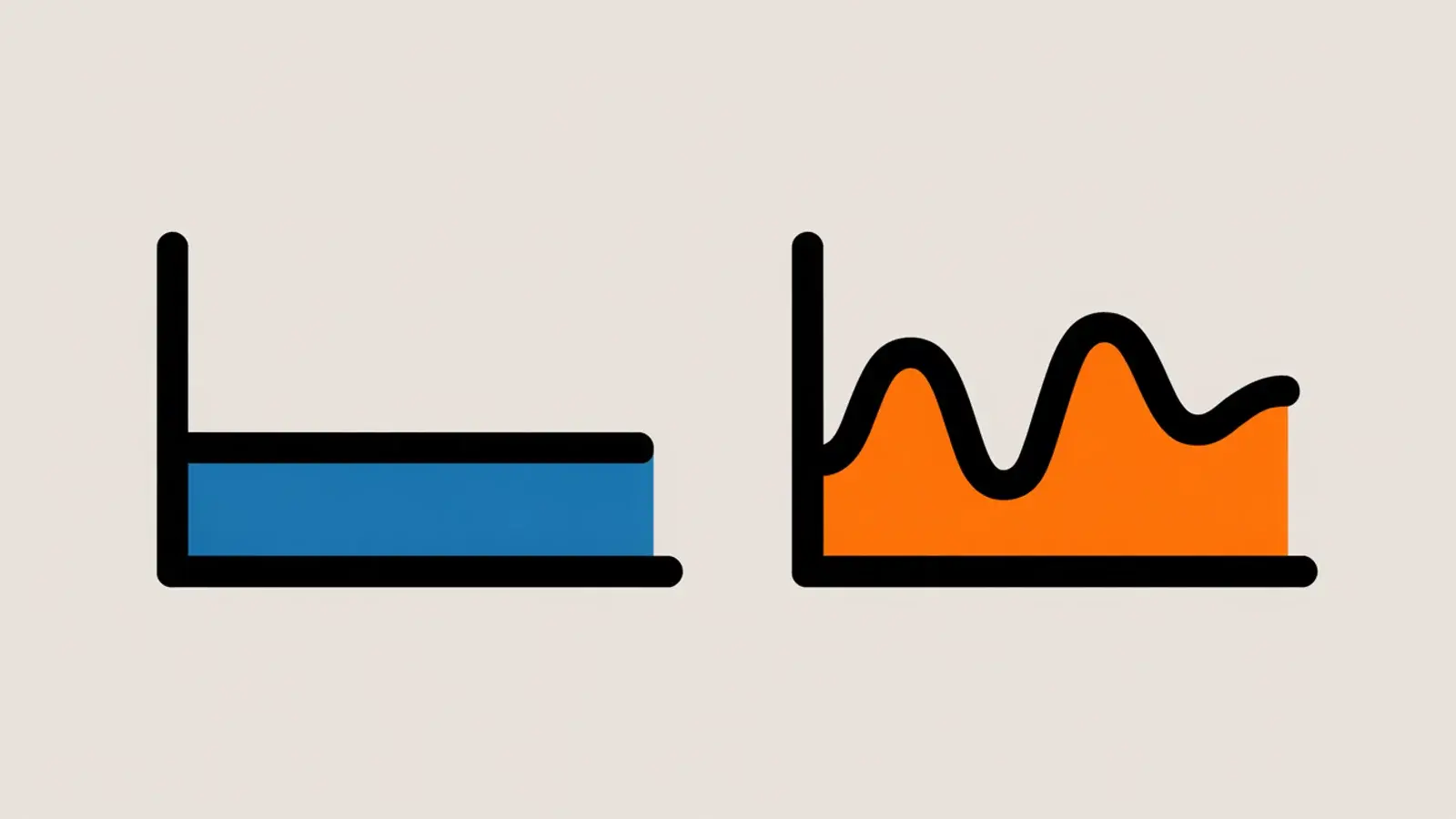
The two plan types
Every competitive electricity plan in Pennsylvania is either fixed-rate or variable-rate. Understanding the difference is essential to making an informed choice.
- Fixed-rate plans lock in a per-kWh generation rate for a set period—typically 6, 12, or 24 months. Your rate stays the same regardless of what happens in the wholesale electricity market.
- Variable-rate plans allow the supplier to change your rate, usually monthly, based on market conditions. The rate you pay in January may be different from the rate you pay in July.
Both plan types are measured against your utility's Price to Compare (PTC)—the default generation rate you'd pay if you don't choose a supplier. The PTC itself changes periodically (often quarterly), which is part of what makes fixed-rate plans appealing: you know what you'll pay even if the PTC increases.
Quick comparison
| Feature | Fixed Rate | Variable Rate |
|---|---|---|
| Price stability | Rate stays constant for contract term | Rate can change monthly |
| Contract term | Typically 6, 12, or 24 months | Month-to-month (no commitment) |
| Early termination fee | Usually yes ($50-$200 typical) | Usually no |
| Flexibility | Locked in for term | Switch anytime without penalty |
| Risk | May miss out if PTC drops | Rate may spike unexpectedly |
| Best for | Budget certainty, staying put | Flexibility, may move soon |
Fixed-rate plans: how they work
With a fixed-rate plan, you agree to a set generation rate for a defined period. If you sign up for a 12-month fixed rate at 9.5¢/kWh, you pay 9.5¢/kWh for every kilowatt-hour you use during those 12 months—regardless of what happens to wholesale electricity prices or your utility's PTC.
Advantages of fixed-rate plans
- Price certainty.You know exactly what you'll pay per kWh for the duration of your contract. This makes budgeting easier and protects you from price spikes.
- Protection from rising rates.If wholesale prices increase or the PTC goes up, your rate stays the same. You've locked in your price.
- Simplicity.Once you enroll, you don't need to think about your electricity rate until the contract approaches expiration.
Disadvantages of fixed-rate plans
- Early termination fees. Most fixed-rate contracts include an ETF if you cancel early. Fees typically range from $50 to $200, though some are calculated per kWh of remaining contract usage. If you might move or want flexibility, this is a real cost.
- Missed opportunities.If the PTC drops significantly during your contract, you're stuck paying your locked-in rate. You can't take advantage of falling prices without paying the ETF.
- Contract expiration traps.Some fixed-rate contracts auto-renew at a higher rate or convert to variable pricing when they expire. If you're not paying attention, you could end up overpaying.
Variable-rate plans: how they work
Variable-rate plans have no fixed contract term. The rate can change monthly based on wholesale market conditions, supplier pricing strategy, or other factors. You're typically free to cancel at any time without penalty.
Advantages of variable-rate plans
- No early termination fee. You can switch suppliers or return to default service anytime without paying a penalty. This flexibility is valuable if you might move or if you want to react quickly to better offers.
- Benefit from falling prices.If wholesale prices or the PTC drop, your variable rate may drop too. You're not locked into an above-market rate.
- No long-term commitment.Month-to-month means you're never stuck. If you find a better deal, you switch.
Disadvantages of variable-rate plans
- Price volatility. Your rate can increase significantly from one month to the next. Summer months often bring higher rates due to increased cooling demand. You may see your bill jump unexpectedly.
- Limited notice of rate changes.Suppliers aren't always required to notify you before changing your rate. You may not know your new rate until you see the bill.
- Teaser rate traps.Some variable plans advertise a low introductory rate that spikes after the first month or two. The advertised rate may not reflect what you'll actually pay over time.
- Harder to budget.Without knowing what your rate will be next month, you can't predict your electricity costs with precision.
How each compares to the Price to Compare
Your utility's Price to Compare is the default rate you'd pay if you don't choose a competitive supplier. It changes periodically—usually quarterly for residential customers.
- Fixed-rate comparison. A fixed rate below the current PTC saves you money today. But if the PTC drops next quarter, your fixed rate might end up higher than default service. Conversely, if the PTC rises, your fixed rate protects you.
- Variable-rate comparison. A variable rate below the PTC saves you money this month. Next month, that comparison resets. The variable rate might stay below the PTC, match it, or exceed it.
Neither plan type guarantees savings over time. Both are bets on future rate movements. Fixed rates bet that you're locking in a good deal; variable rates bet that you'll stay competitive without commitment.
➤See your utility's current Price to CompareWhen fixed makes sense
Consider a fixed-rate plan if:
- You value budget predictability and want to know what your generation charge will be each month.
- You plan to stay at your current address for the duration of the contract.
- You believe energy prices may rise (due to natural gas costs, grid conditions, or other factors).
- You don't want to monitor electricity rates regularly.
- The fixed rate is meaningfully below your current PTC and you're comfortable with the commitment.
When variable makes sense
Consider a variable-rate plan if:
- You might move within the next year and don't want to pay an early termination fee.
- You believe energy prices may fall and want to benefit from lower rates.
- You're comfortable monitoring rates and switching suppliers if your rate spikes.
- You want maximum flexibility with no contractual commitment.
- The variable rate is significantly below the PTC and you're willing to accept price fluctuation risk.
Red flags to watch for
Teaser rates
Some suppliers advertise an attractively low rate that only applies for the first month or two. After the introductory period, the rate jumps—sometimes dramatically. Read the disclosure statement. If the initial rate is much lower than comparable offers, ask what the rate becomes after the intro period.
Intro rates that balloon
Similar to teaser rates, some fixed-rate contracts have a low initial rate that increases partway through the contract. A "12-month fixed" plan might be 8¢/kWh for months 1-3 and 12¢/kWh for months 4-12. Calculate the blended rate over the full term before comparing.
No rate cap on variable plans
Some variable plans have no ceiling on how high the rate can go. In extreme market conditions, rates could spike to levels far above the PTC. Ask whether the plan includes a rate cap, and if so, what it is. A plan without a cap carries more risk.
Auto-renewal at worse terms
Many fixed-rate contracts auto-renew when they expire—often at a higher rate or as a variable plan. Suppliers may or may not notify you before renewal. Read the contract terms and set a reminder to review your options before expiration.
Unrealistic savings claims
Be skeptical of suppliers promising dramatic savings without clear math. If a rate seems too good to be true, read the fine print. The lowest headline rate often comes with strings attached.
➤Ready to compare plans? Enter your ZIP codeFrequently asked questions
What's the difference between fixed and variable electricity rates?
Fixed rates stay constant for your entire contract term (e.g., 12 months). Variable rates can change monthly based on market conditions. Fixed provides price certainty; variable offers flexibility but carries price risk.
Can variable rates go up without notice?
Variable rates can change monthly, and suppliers aren't always required to notify you in advance. Some suppliers provide notice; others simply adjust the rate on your next bill. Check your contract terms to understand what notice, if any, is required.
Do fixed-rate plans have early termination fees?
Most fixed-rate plans include early termination fees if you cancel before the contract ends. ETFs vary by supplier and contract, typically ranging from $50 to $200 or a per-kWh penalty. Check the disclosure statement for the specific fee.
Which is better: fixed or variable rate electricity?
Neither is universally better. Fixed rates suit customers who value predictability and plan to stay at their address. Variable rates suit customers who want flexibility, expect rates to fall, or may move soon. The right choice depends on your circumstances.
What happens when my fixed-rate contract ends?
Contracts handle expiration differently. Some auto-renew at a new rate. Some convert to variable pricing. Some let service lapse to your utility's default service. Read your contract's renewal terms carefully and review your options before expiration.