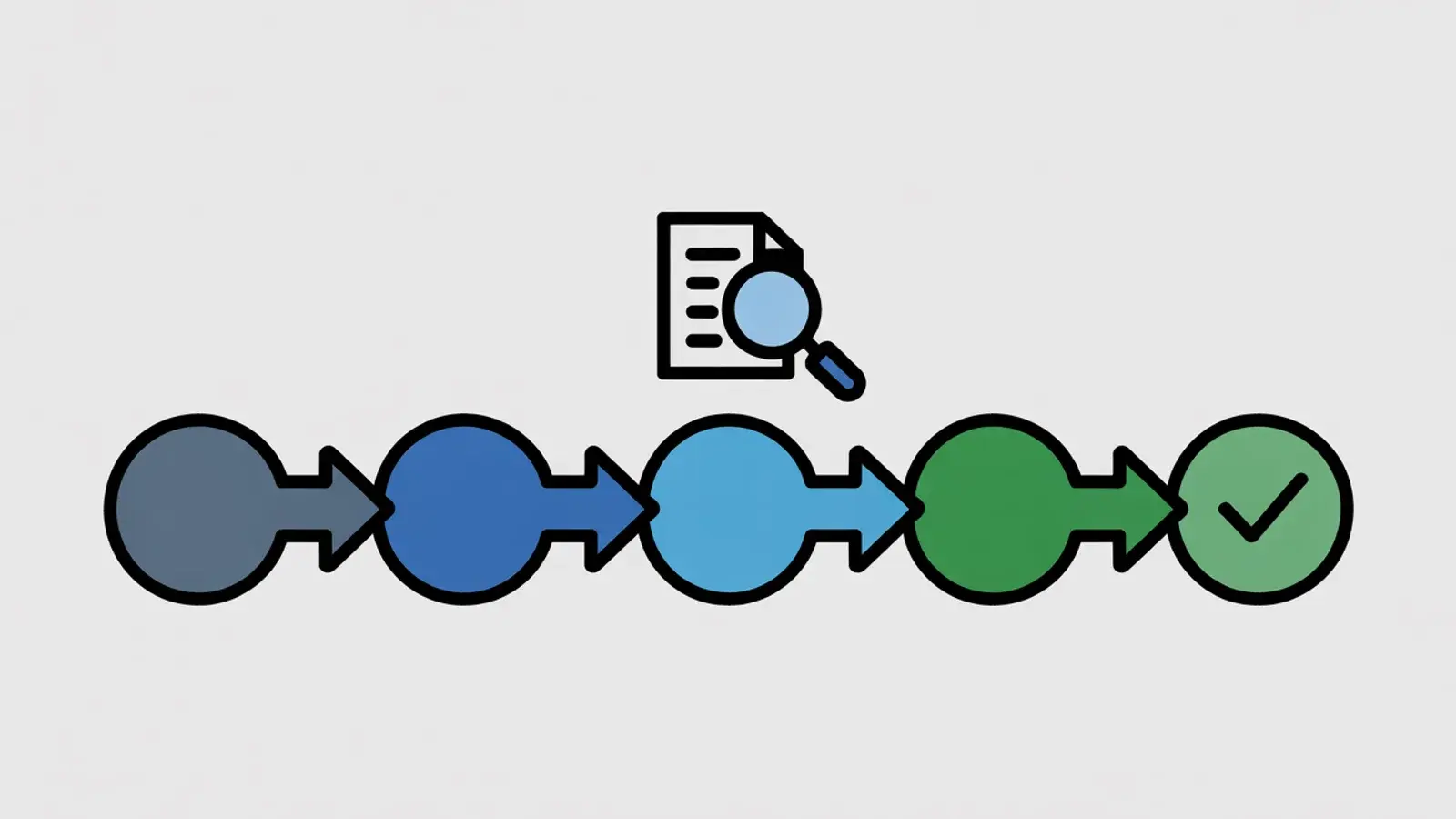

Choosing an electricity plan involves five sequential decisions: determining if you can choose, understanding your current situation, defining your priorities, reading the plan disclosure document, and comparing real options. Most advice skips the first three steps and jumps straight to "compare rates" — which is why many shoppers end up on plans that don't fit their needs.
This guide walks through all five phases. If you're in a deregulated state with supplier choice, following this framework takes about 30-60 minutes and can save you hundreds of dollars annually. If you're in a regulated state, the first phase will tell you that — and we'll cover what options you do have.
Phase 1: Determine if you can choose
Before comparing plans, confirm you have a choice. Electricity supplier choice exists only in deregulated states.
You can choose your supplier in these 14 states + D.C.:
- Texas
- Pennsylvania
- Ohio
- New York
- New Jersey
- Maryland
- Massachusetts
- Connecticut
- Illinois
- Michigan (limited — 10% cap on competitive enrollment)
- Maine
- New Hampshire
- Rhode Island
- Washington D.C.
You cannot choose in regulated states (California, Florida, Georgia, and roughly 36 others). Your utility is a regulated monopoly. You can review rate plan options with your utility — time-of-use, tiered rates, budget billing — but you can't select a different generation supplier.
If you're in a regulated state, the rest of this guide doesn't apply directly. Focus instead on understanding your utility's rate options and reducing usage. Our guide on why electric bills are high covers the levers available to you.
For comprehensive details on which states have choice, see our state-by-state electricity deregulation overview.
Phase 2: Read your current bill
Before shopping, you need to know your baseline. Pull your most recent electricity bill and find these numbers:
Your current supply rate: Look for the line labeled "supply charge," "generation charge," or "energy charge." This is the per-kWh rate for electricity supply — the part you can shop for in deregulated states. In Pennsylvania, compare this to your utility's "Price to Compare" (PTC). In Texas, the Electricity Facts Label shows "Average Price" at different usage levels.
Your delivery charge: This goes to your utility for maintaining the grid. You can't shop this — it's fixed regardless of which supplier you choose. Understanding this prevents confusion when comparing plans that show supply-only vs. all-in rates.
Your monthly kWh usage: This number determines how much you'll actually save (or pay) at different rates. A 2¢/kWh savings matters more at 1,500 kWh/month than at 500 kWh/month.
Calculate your effective supply rate: Divide your total supply charges by your total kWh used. If your supply charges were $95 and you used 950 kWh, your effective rate is $0.10/kWh. This is your benchmark — any plan must beat this number to save you money.
Your current contract status: Are you on a fixed-rate contract? When does it expire? Are you on your utility's default rate? Knowing this tells you what options are available without penalty.
Phase 3: Define your plan priorities
Not everyone wants the same thing from an electricity plan. Before comparing options, clarify what matters to you.
Fixed vs. variable rate
Fixed-rate plans lock your per-kWh rate for a set term (typically 6, 12, or 24 months). You get price certainty regardless of market movements. The trade-off: fixed rates typically carry a small premium over current variable rates because suppliers hedge their risk.
Variable-rate plans adjust monthly based on wholesale market conditions. They can be lower than fixed rates when wholesale prices are low, but can spike dramatically during extreme weather or supply constraints.
For most households, fixed-rate plans offer the best balance of predictability and protection. Variable rates make sense for short-term situations or when you're willing to actively monitor the market. See our explainer on fixed vs. variable rates for the mechanics, or our decision framework on which to choose for situational guidance.
Term length
- 3-6 months: Maximum flexibility, minimal commitment, but you'll need to shop again soon.
- 12-24 months: Good balance for most homeowners and stable renters. Rate certainty without excessive lock-in.
- 24-36 months: Long-term stability, but locks you in if rates fall. May include early termination fees if you move.
Match term length to your situation. Renters or people likely to move should avoid long-term contracts with hefty early termination fees.
Green energy priority
If renewable energy matters to you, look for plans backed by Renewable Energy Certificates (RECs). Suppliers like Inspire Clean Energy specialize in 100% renewable plans. Constellation Energy, backed by the largest nuclear fleet in the U.S., offers clean energy options. Green plans typically cost slightly more — decide whether the premium fits your budget.
Customer service tolerance
The absolute lowest rates sometimes come from suppliers with elevated complaint patterns. Some shoppers prioritize lowest rate regardless; others value responsive service and peace of mind.
Our supplier reviews rate suppliers across pricing, transparency, and customer service, with verdict tiers: Recommended, Proceed with Caution, and High Caution Advised. Suppliers like Public Power offer competitive rates with solid service records. Suppliers like American Power & Gas may advertise eye-catching rates but carry documented issues.
Phase 4: Read the Electricity Facts Label
This is the most important — and most overlooked — step. Every electricity plan comes with a standardized disclosure document: the Electricity Facts Label (EFL) in Texas, or the Plan Information Document in other states. This document tells you what you'll actually pay, not what the marketing says.
What to find in the EFL
The rate at YOUR usage level: EFLs show rates at multiple usage levels (typically 500, 1,000, and 2,000 kWh). A plan advertising 9¢/kWh might actually cost 11¢/kWh at 500 kWh usage due to fixed monthly fees that increase the effective rate at low volumes. Check the rate at the usage level closest to your own.
Monthly fees: Some plans have monthly service fees of $5, $10, or more. These increase your effective rate, especially at lower usage levels. A "9¢/kWh" plan with a $10/month fee costs 10¢/kWh at 1,000 kWh — and 11¢/kWh at 500 kWh.
Tiered pricing: Some plans charge different rates at different usage thresholds. A plan might be 8¢/kWh for the first 500 kWh, then 14¢/kWh above that. If your usage is 800 kWh/month, you're paying the higher rate on a significant portion of your bill.
Introductory vs. ongoing rates: Some plans advertise very low rates for the first 1-3 months, then automatically increase. Read carefully for language like "introductory," "promotional," or "first X months." American Power & Gas, for example, has documented patterns of introductory rates that reset to much higher levels.
Early termination fee (ETF): Fixed-rate contracts typically include ETFs ranging from $50 to $200+ if you cancel before the term ends. Know this before signing — especially if you might move.
Auto-renewal terms: What happens when your contract expires? Many plans automatically roll to a variable rate, often significantly higher than your original fixed rate. Some require 30-60 days notice to avoid auto-renewal. This is where calendar reminders become essential.
Where to find the EFL
In deregulated states, suppliers must provide this document before you enroll. State shopping tools (see table below) typically link to EFLs for each plan. If a supplier won't show you the EFL before enrollment, that's a red flag.
Phase 5: Compare 3-5 plans and decide
With your priorities defined and your EFL-reading skills sharp, compare at least 3-5 plans from your state's official shopping tool.
State shopping tools
| State | Shopping Tool | What It Provides |
|---|---|---|
| Pennsylvania | PA Power Switch (papowerswitch.com) | Licensed suppliers, rates, EFL links |
| Texas | Power to Choose (powertochoose.org) | Plans, rates, EFLs, usage calculators |
| Ohio | Apples to Apples (energychoice.ohio.gov) | Supplier comparisons by utility zone |
| New York | Power to Choose NY (documents.dps.ny.gov/PTC) | Supplier offers by utility |
| New Jersey | NJ Power Switch (njpowerswitch.com) | Licensed suppliers and rates |
| Maryland | MD PSC Shopping (mdpsc.state.md.us) | Supplier comparisons |
| Massachusetts | Energy Switch MA (energyswitchma.gov) | Supplier comparisons by utility |
| Connecticut | Energize CT (energizect.com) | Supplier options |
| Illinois | Plug In Illinois (pluginillinois.org) | Supplier listings |
These official tools list only licensed, regulated suppliers. This provides baseline consumer protection — though it doesn't guarantee good customer service.
Compare on effective rate at YOUR usage level
The headline rate isn't what matters. Compare the effective rate at your actual monthly usage, accounting for any monthly fees. The EFL shows this directly — use it.
Check supplier complaint patterns
Before enrolling, spend 5 minutes checking the supplier's reputation:
- Better Business Bureau (BBB): Look at complaint volume, not just the letter grade
- State public utility commission complaints (if published)
- Trustpilot, Reddit, Consumer Affairs: Look for patterns, not individual reviews
If multiple people report the same issues — unexpected rate increases, billing disputes, cancellation obstacles — that's a signal.
For supplier-specific assessments, see our electricity supplier reviews. We've reviewed 12 major suppliers and assigned verdict tiers based on pricing, transparency, customer service, and regulatory history.
Common mistakes to avoid
Signing up at the door or in a store: Door-to-door and kiosk sales generate a disproportionate share of customer complaints. Suppliers like NRG Home, Spark Energy, and IGS Energy use these channels extensively. If a salesperson approaches you, take their materials and compare rates online later. Never sign at the door.
For more on avoiding problematic sales, see our guide on electricity scams and slamming.
Chasing the lowest headline rate: Some suppliers advertise rates that seem too good to be true — because they are. Introductory rates that reset, hidden monthly fees, and tiered pricing can all make the "lowest rate" surprisingly expensive. Read the EFL.
Ignoring contract end dates: When your fixed-rate contract expires, most suppliers automatically roll you onto a variable rate — often significantly higher. Set a calendar reminder 60 days before expiration to shop again.
Assuming all suppliers are equal: Supplier quality varies dramatically. Some have clean regulatory records and responsive service. Others have settled class action lawsuits or face ongoing regulatory actions. Our supplier reviews help you distinguish between them.
After you choose: enrollment and monitoring
Once you've selected a plan:
-
Enroll through official channels. Use the state shopping tool or the supplier's website directly. Keep your enrollment confirmation and contract documents.
-
Note your contract end date. Set a calendar reminder 60 days before to start shopping again.
-
Monitor your first 2-3 bills. Confirm the rate matches what you enrolled in. If charges don't match your contract, dispute immediately.
For step-by-step switching mechanics, see our guide on how to switch electric companies.
FAQ
What's the most important factor when choosing an electricity plan?
The effective rate over your contract term — not the headline rate. Calculate total cost including any fees, check for tiered pricing that penalizes your usage level, and verify the rate structure over the full term. The lowest advertised rate often isn't the lowest actual cost.
How do I find out my current electricity rate?
Look at your most recent electricity bill for the "supply charge" or "generation charge" line. Divide the total supply charges by your total kWh used to get your effective per-kWh rate. In Pennsylvania, your utility's "Price to Compare" is the benchmark rate listed on your bill. In Texas, the EFL shows "Average Price" at standardized usage levels.
What's an Electricity Facts Label?
The Electricity Facts Label (EFL) is a standardized disclosure document that every electricity supplier must provide in Texas. Other states have equivalent documents (Plan Information Documents). The EFL shows the actual rate you'll pay at different usage levels, any monthly fees, early termination fees, and contract terms. It's the single most important document to read before enrolling — more important than marketing materials.
Should I always pick the lowest-rate plan?
Not necessarily. The lowest rate may come from a supplier with significant customer service issues, aggressive auto-renewal practices, or introductory rates that reset to higher levels. Consider the tradeoff between rate savings and supplier quality. A slightly higher rate from a well-reviewed supplier may be worth the peace of mind. Check our supplier reviews for quality assessments.
How often should I shop for a new electricity plan?
At minimum, shop before your current contract expires — set a reminder 60 days out. Some engaged shoppers review rates annually or whenever they receive a renewal notice. In volatile markets, shopping more frequently can capture better rates. If you're on a variable rate, you can switch anytime without penalty.