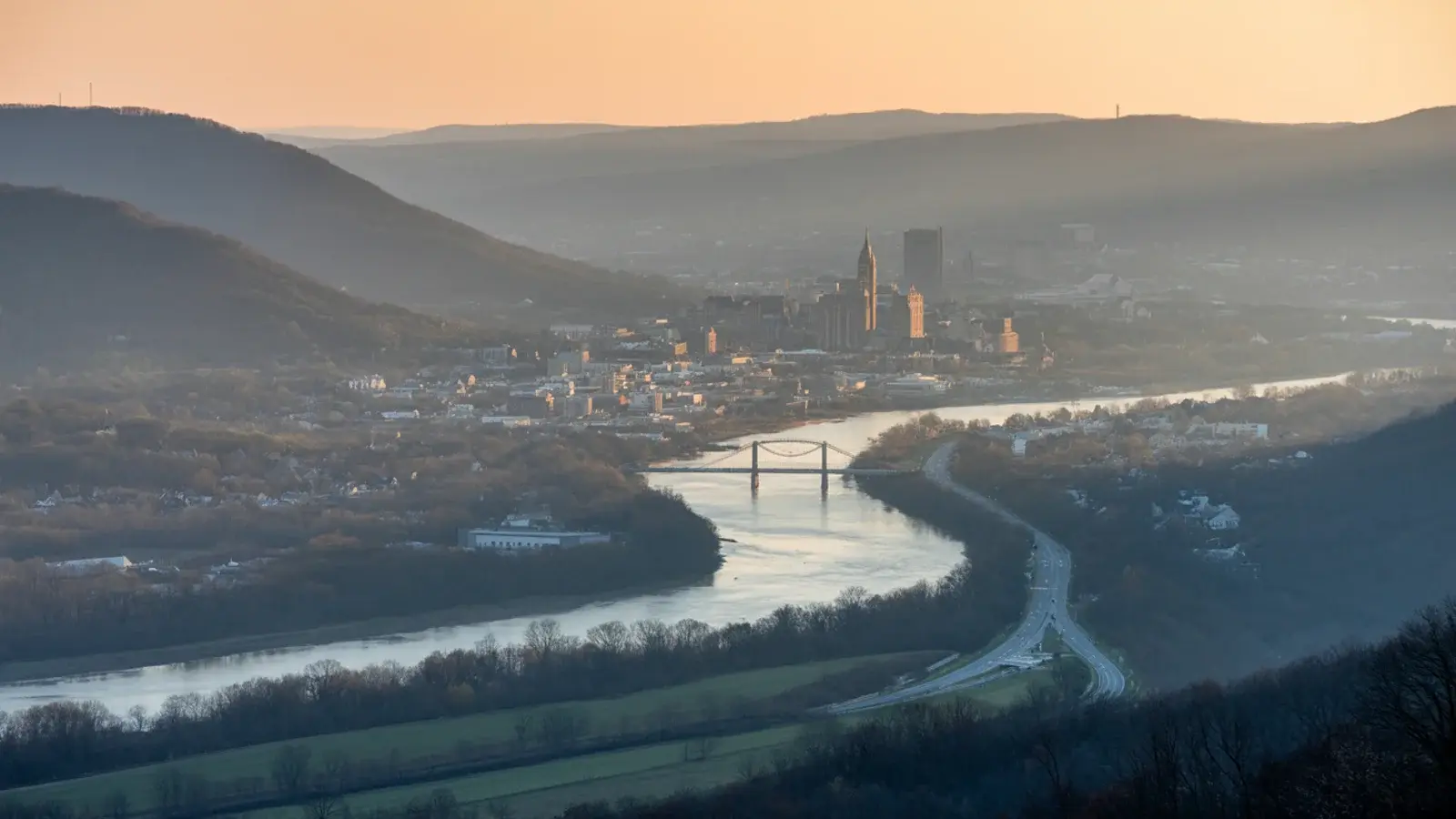

Scranton and Wilkes-Barre are 20 miles apart in northeastern Pennsylvania's Wyoming Valley. Both are served by PPL Electric. Both pay the exact same default electricity rate: 12.953 cents per kilowatt-hour through May 31, 2026.
When your utility is identical, your rate is identical. But your bill is not. How much you actually pay depends on how much electricity you use — and that varies with housing type, home age, heating systems, and local conditions that differ between these sister cities.
The rate baseline: one utility, one rate
Both Scranton and Wilkes-Barre fall within PPL Electric's service territory. Unlike comparisons between Philadelphia and Pittsburgh (PECO vs. Duquesne Light) or Reading and Lancaster (Met-Ed vs. PPL), a comparison between Scranton and Wilkes-Barre starts from identical rate foundations.
| Metric | Scranton | Wilkes-Barre |
|---|---|---|
| Utility | PPL Electric | PPL Electric |
| Current PTC (through May 31) | 12.953¢/kWh | 12.953¢/kWh |
| June 2026 PTC | 13.147¢/kWh | 13.147¢/kWh |
| Increase | +1.5% | +1.5% |
At average Pennsylvania household usage of 850 kWh per month, the supply portion of the bill is identical: $110.10 per month at the current rate, rising to $111.75 after June 1.
For the full PPL Electric rate breakdown, see our PPL Price to Compare update.
Why bills differ within the same utility territory
Identical rates do not produce identical bills. Your actual electricity cost depends on how much you use, and usage varies based on local factors.
Housing stock differences
Scranton sits in a mountain valley, with neighborhoods climbing hillsides around the downtown core. The city's housing stock reflects its history as an anthracite coal capital — many homes date to the late 1800s and early 1900s, built when coal was cheap and insulation was minimal. Older row homes and single-family houses predominate in established neighborhoods.
Wilkes-Barre lies along the Susquehanna River floodplain. The city experienced significant flood damage in 1972 (Hurricane Agnes) and 2011 (Tropical Storm Lee), which has shaped its housing patterns. Some older housing stock was demolished; newer construction tends toward more energy-efficient standards. The flatter terrain allowed for more suburban-style development in surrounding areas.
Older homes with original windows, limited insulation, and aging HVAC systems use measurably more electricity for heating and cooling than newer or renovated homes. A 1910 Scranton Victorian can use 30-50% more electricity than a 1990s home of similar size.
Climate and terrain
Both cities share northeastern Pennsylvania's climate — cold winters, warm summers, and roughly 6,000 heating degree days annually. However, terrain creates microclimates.
Scranton's valley location can trap cold air in winter, making some neighborhoods slightly colder than regional averages. The surrounding mountains also affect wind patterns and temperature inversions.
Wilkes-Barre's river valley experiences different air circulation patterns. Proximity to the Susquehanna moderates some temperature extremes but contributes to humidity in summer months.
These differences are modest — perhaps a few percent in annual heating or cooling demand — but they compound over years of bills.
Heating fuel mix
Both cities have significant populations using electric heat, heat pumps, and natural gas heating. The mix varies by neighborhood and housing age.
Households with electric heat see winter electricity bills of $200-400 or more, depending on home size and efficiency. A Scranton household heating with electricity will have dramatically higher winter bills than a Wilkes-Barre neighbor heating with natural gas — even though both pay the same rate per kWh.
Heat pump adoption is growing in both cities. Modern heat pumps are efficient down to low temperatures but still consume substantial electricity in northeastern Pennsylvania winters.
Population and household size
Scranton has a population of approximately 76,000, making it the larger of the two cities. Wilkes-Barre has approximately 44,000 residents. Larger households typically use more electricity.
Both cities have significant student populations (University of Scranton, Wilkes University, King's College, Misericordia University nearby), which affects seasonal occupancy patterns in some neighborhoods.
Supplier competition: same market for both cities
Because both cities are in PPL territory, they share identical competitive supplier options:
| Metric | Scranton / Wilkes-Barre (PPL territory) |
|---|---|
| Active supplier plans | 120 |
| Number of suppliers | 58 |
| Cheapest available rate | 10.45¢/kWh |
| Default PTC | 12.953¢/kWh |
| Maximum savings | 2.50¢/kWh |
A Scranton resident and a Wilkes-Barre resident have access to the exact same 120 plans from the same 58 suppliers at the same prices. Your ZIP code determines your utility territory — and all Wyoming Valley ZIP codes route to PPL Electric.
The cheapest plan undercuts the PPL default rate by 2.50¢ per kWh. At 850 kWh per month, that translates to:
- Monthly savings: $21.28
- Annual savings: $255
This savings opportunity is identical in both cities because it depends entirely on the gap between PPL's PTC and competitive supplier rates.
Browse current plans for PPL Electric territory.
How to compare your actual costs
If you live in the Wyoming Valley and want to understand how your electricity costs compare to neighbors, focus on these factors:
Check your actual usage. Your PPL bill shows your monthly kWh consumption. Compare this to the state average of 850 kWh. If you use more, you pay more — regardless of which city you live in.
Consider your home's age and efficiency. A well-insulated Wilkes-Barre ranch house built in 1985 will likely use less electricity than a drafty Scranton Victorian built in 1905, even if both households have similar lifestyles.
Know your heating system. Electric heat versus gas heat is the single largest determinant of winter electricity bills. If you heat with electricity, your bills will be dramatically higher in winter than neighbors who heat with gas.
Check if you have a supplier. About 30% of Pennsylvania residential customers have switched to a competitive supplier. If you are still on PPL's default rate, you could save $255 per year by switching — regardless of which Wyoming Valley city you call home.
For step-by-step switching instructions, see our guide to switching suppliers in Pennsylvania.
What drives cost differences in the Wyoming Valley
Within the Scranton-Wilkes-Barre metro area, electricity cost differences are driven by:
-
Usage patterns. By far the largest factor. A household using 1,200 kWh/month pays 41% more than one using 850 kWh/month — bigger than any regional difference within the same utility territory.
-
Supplier choice. Switching from PPL's 12.953¢ rate to the cheapest available 10.45¢ rate saves 19% on supply costs. This is entirely within your control.
-
Housing characteristics. Home age, size, insulation quality, and heating system all affect how much electricity you need.
-
Behavioral factors. Thermostat settings, appliance efficiency, and energy habits affect monthly usage.
City-specific factors (Scranton vs. Wilkes-Barre) rank last on this list. The rate is identical, the supplier options are identical, and the climate is nearly identical. The meaningful differences are at the household level.
FAQ
Is electricity cheaper in Scranton or Wilkes-Barre?
The rate is identical — 12.953¢/kWh — because both cities are served by PPL Electric. Bills differ based on household usage, not city location.
Do I have the same supplier options in both cities?
Yes. All Wyoming Valley residents have access to the same 120 plans from 58 suppliers. The competitive market is organized by utility territory, not municipality.
Why is my bill higher than my neighbor's if we pay the same rate?
Your bill equals rate times usage. If your neighbor uses less electricity — due to a smaller home, better insulation, a higher thermostat setting in winter, or gas heating instead of electric — their bill will be lower even at identical rates.
Should I factor in electricity costs when choosing between Scranton and Wilkes-Barre?
No. Electricity rates are identical across both cities and surrounding areas within PPL territory. Housing costs, commute times, school districts, and other factors should drive your decision. If anything, focus on the energy efficiency of specific homes you are considering — not which city they are in.