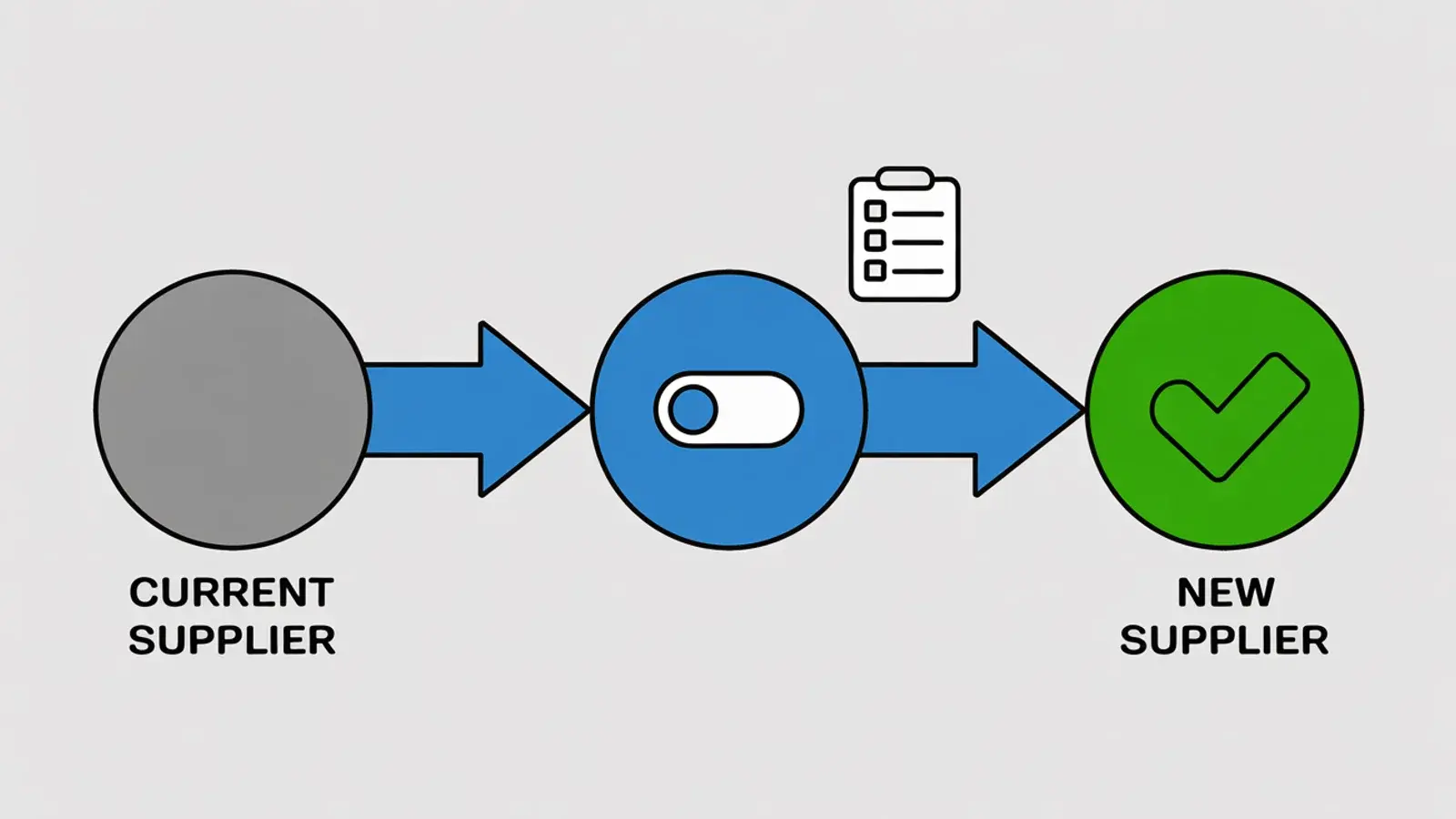

Switching electric companies is straightforward in deregulated states — most switches complete in 1-2 billing cycles with no service interruption. You don't call your old supplier; the new one handles the transfer. The entire process takes about 30-60 minutes of your time.
The catch: you can only switch your electricity supplier if you live in one of the 14 deregulated states. If you're in a regulated state, your utility is your only option — though you can still review your rate plan for potential savings.
Step 1: Determine if you can switch
Electricity supplier choice exists in 14 deregulated states plus Washington D.C.:
Full retail choice:
- Texas
- Pennsylvania
- Ohio
- New York
- New Jersey
- Maryland
- Massachusetts
- Connecticut
- Illinois
- Michigan
- Maine
- New Hampshire
- Rhode Island
- Washington D.C.
If you're in one of these states: You can choose your electricity supplier. Your local utility still delivers the power (handles the wires, meters, and outages), but you pick who generates and sells you the electricity.
If you're in a regulated state (California, Florida, Georgia, and roughly 36 others): You can't switch suppliers. Your utility is a regulated monopoly. However, you can often review your rate plan options — time-of-use pricing, tiered rates, or budget billing — which may reduce your costs.
Step 2: Find your current rate
Before shopping, know what you're currently paying. Look at your most recent electricity bill for:
- Supply charge or energy charge: This is the per-kWh rate for electricity supply — the part you can shop for in deregulated states.
- Delivery charge: This goes to your utility for maintaining the grid. You can't shop this; it's fixed regardless of your supplier.
- Total kWh used: How much electricity you consumed in the billing period.
Calculate your effective rate:
Divide your total supply charges by your total kWh used. For example, if your supply charges were $85 and you used 850 kWh, your effective rate is $0.10/kWh.
In Pennsylvania, your utility's "Price to Compare" (PTC) is the benchmark rate. Any competitive supplier below your PTC saves you money. Texas uses "Average Price" per kWh on the Electricity Facts Label. Other states have similar comparison metrics — check your state's shopping tool.
Step 3: Identify what you're shopping for
Before comparing suppliers, clarify your priorities:
Fixed vs. variable rate:
- Fixed-rate plans lock your per-kWh rate for a set term (typically 6-36 months). You get price certainty but may miss out if market rates drop.
- Variable-rate plans adjust monthly based on market conditions. Lower rates are possible but so are spikes — some customers have seen bills double unexpectedly.
For most households, fixed-rate plans offer the best balance of predictability and protection.
Term length:
- Short-term (3-6 months): More flexibility, but you'll need to shop again soon.
- Medium-term (12-24 months): Good balance for most homeowners.
- Long-term (24-36 months): Maximum rate certainty, but may include early termination fees.
Match term length to your situation. Renters or people likely to move should avoid long-term contracts with hefty cancellation fees.
Green energy priority: Some suppliers offer 100% renewable energy plans backed by renewable energy certificates (RECs). If clean energy matters to you, look for suppliers like Inspire Clean Energy or Constellation Energy's green plans.
Customer service vs. lowest rate: The absolute lowest rates sometimes come from suppliers with elevated complaint patterns. Suppliers like Public Power offer competitive rates with solid service records. Decide how much customer service quality matters relative to marginal rate savings.
Step 4: Find your state shopping tool
Each deregulated state maintains an official shopping tool to compare licensed suppliers:
| State | Shopping Tool | URL |
|---|---|---|
| Pennsylvania | PA Power Switch | papowerswitch.com |
| Texas | Power to Choose | powertochoose.org |
| Ohio | Apples to Apples | energychoice.ohio.gov |
| New York | Power to Choose NY | documents.dps.ny.gov/PTC |
| New Jersey | NJ Power Switch | njpowerswitch.com |
| Maryland | MD PSC Shopping | mdpsc.state.md.us |
| Massachusetts | Energy Switch MA | energyswitchma.gov |
| Connecticut | Energize CT | energizect.com |
| Illinois | Plug In Illinois | pluginillinois.org |
| Michigan | MI Choice | michigan.gov/mpsc |
These official tools list only licensed suppliers regulated by your state public utility commission. This provides a baseline level of consumer protection — though it doesn't guarantee good customer service.
For detailed guidance on how shopping works in different markets, see our electricity deregulation state-by-state overview.
Step 5: Compare 3-5 suppliers
Don't just pick the first supplier with a low headline rate. Compare at least 3-5 options and check:
The Plan Information Document (EFL in Texas): Every supplier must provide a standardized disclosure. This shows the actual rate structure, not just the advertised price. Look for:
- Per-kWh rate at different usage levels (some plans have tiered pricing)
- Monthly fees that increase your effective rate
- Whether the rate includes delivery or supply only
- Term length and early termination fee
Early termination fees (ETFs): Fixed-rate contracts typically include ETFs ranging from $50-200 if you cancel early. Know this before enrolling — especially if you might move.
Customer complaint patterns: Check the Better Business Bureau, Trustpilot, and Reddit for recent complaints. Patterns matter more than individual reviews. If multiple people report the same issue (unexpected rate increases, billing disputes, hard-to-cancel service), that's a signal.
For supplier-specific assessments, see our electricity supplier reviews. We rate suppliers across pricing, transparency, customer service, and green options — with honest verdict tiers (Recommended, Proceed with Caution, High Caution Advised).
Some suppliers we've reviewed with solid track records include Direct Energy and Constellation Energy. For value-focused shopping, Public Power often beats national brands on price in Pennsylvania.
Step 6: Enroll with your new supplier
Once you've chosen a supplier:
What you'll need:
- Your utility account number (on your bill)
- Your service address
- A recent bill (for verification)
How enrollment works: You typically enroll through the supplier's website, by phone, or through your state shopping tool. In most states, the new supplier notifies your utility and handles the transition. You don't need to call your current supplier.
In Texas: The new provider handles everything including the switching notification. The transfer typically completes within 1-2 business days.
In Pennsylvania and most other states: The switch takes effect at your next meter read, typically 1-2 billing cycles. You'll continue receiving bills from your utility, but the supply charge will reflect your new supplier's rate.
Save your confirmation: Keep the enrollment confirmation email and any contract documents. Note your contract end date — you'll want to shop again before auto-renewal kicks in.
Step 7: Monitor your next 2-3 bills
After switching, verify everything transferred correctly:
- Check that your new supplier appears on your bill. In most states, you'll see a separate line item for supply charges from your new supplier.
- Confirm the rate matches what you enrolled in. If the per-kWh rate differs from your contract, contact your supplier immediately.
- Watch for unexpected charges. Legitimate suppliers don't add surprise fees. If you see charges you don't recognize, dispute them.
- Set a calendar reminder 60 days before contract end. This gives you time to shop again before you're rolled onto a potentially higher variable rate.
Common switching mistakes to avoid
Signing up at the door or in a store: Door-to-door and kiosk sales generate a disproportionate share of customer complaints. High-pressure tactics often obscure contract terms. If a salesperson approaches you, take their materials and compare rates online later. Never sign at the door.
For more on avoiding problematic sales tactics, see our guide: How to Avoid Electricity Scams and Slamming.
Chasing the lowest headline rate: Some suppliers advertise eye-catching introductory rates that reset to much higher rates after 1-3 months. Always check the Plan Information Document for the rate structure over the full term.
Ignoring contract end dates: When your fixed-rate contract expires, most suppliers automatically roll you onto a variable rate — often significantly higher. Set a reminder to shop again before expiration.
Assuming all suppliers are equal: Supplier quality varies dramatically. Some have clean regulatory records; others have settled class action lawsuits. Our supplier reviews provide honest assessments to help you distinguish between them.
When NOT to switch
Switching isn't always the right move:
When you're in a regulated state: You can't switch suppliers. Focus on reviewing rate plan options with your utility instead.
When you're already on a competitive fixed rate: If your current rate is already below market, switching might not save much. Check current market rates before moving.
When usage is your cost driver: If your bill is high because you use a lot of electricity (heavy AC, electric vehicle charging, etc.), switching suppliers will help marginally — but reducing usage will help more. A 10% rate reduction saves less than a 20% usage reduction.
When the savings aren't meaningful: Switching to save $0.005/kWh on 800 kWh/month saves $4/month. Worth the effort? Maybe not if the new supplier has weaker customer service.
FAQ
How long does it take to switch electric companies?
In most states, switching takes 1-2 billing cycles (typically 4-6 weeks) for the new rate to appear on your bill. In Texas, the switch can complete in 1-2 business days. You'll have continuous power throughout — no service interruption.
Will my power get shut off when I switch?
No. Your local utility still delivers the electricity regardless of which supplier generates it. Switching suppliers is an administrative change that happens in the background. You'll have power throughout the transition.
Do I have to cancel my current supplier?
No. When you enroll with a new supplier, they notify your utility and handle the transition. You don't need to call your old supplier. However, if you're leaving a fixed-rate contract early, you may owe an early termination fee.
What if I switch and don't like my new supplier?
You can switch again. In most states, there's no limit on how often you can change suppliers. If you're on a variable-rate plan, you can typically leave anytime without penalty. Fixed-rate plans may have early termination fees — check your contract terms.
Can I switch back to my utility's default rate?
Yes. In deregulated states, you can always return to your utility's default service (called "Price to Compare" in PA, "Provider of Last Resort" in other states). This is your fallback option if you're dissatisfied with competitive suppliers. However, the utility default rate isn't always the cheapest — that's why competitive suppliers exist.